
When designing foundations for a new residential dwelling or an extension, one of the most significant variables is the ground it will sit on. While above-ground construction may be carefully planned and budgeted, it is the unseen ground conditions that often introduce unexpected costs. The type of soil, its water retention properties, and the presence of trees can all have a profound impact on foundation design, sometimes necessitating specialist solutions that require the expertise of a structural engineer.
Soil Type and Its Influence on Foundations
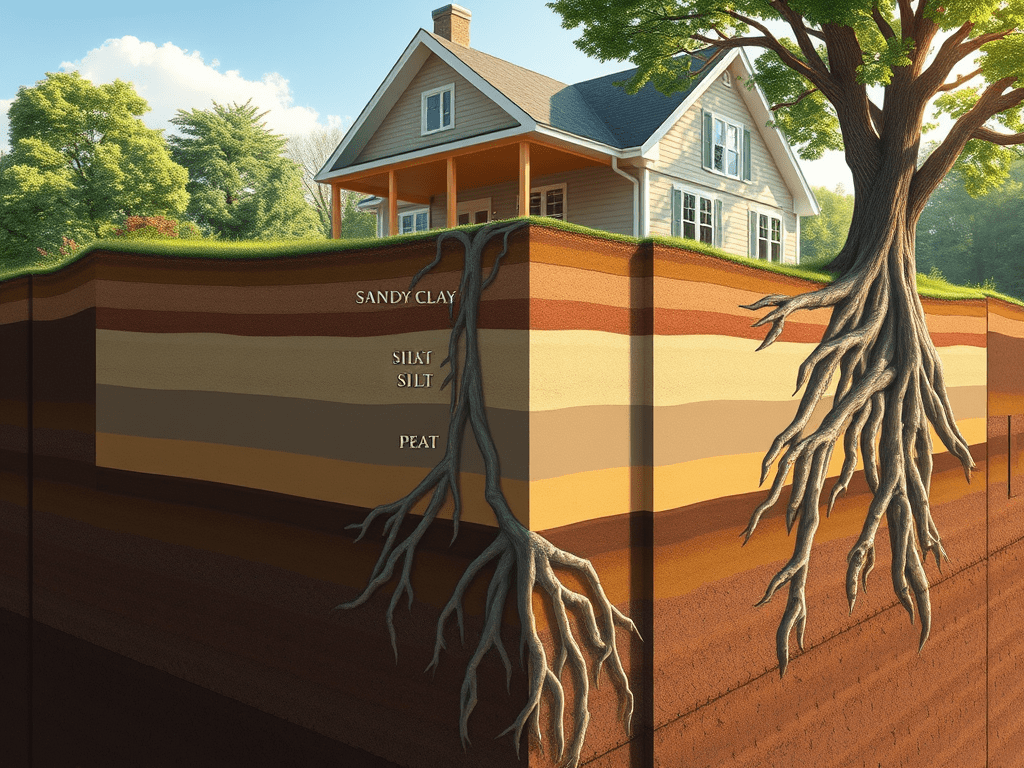
Different soil types behave in distinct ways under load, and not all provide the same level of stability. Sandy soils tend to drain well and offer good bearing capacity but can shift if they are not properly compacted. Clay soils, on the other hand, are highly reactive to moisture changes, expanding when wet and shrinking when dry. This movement, known as heave and shrinkage, can cause significant stress on foundations, leading to cracking and structural movement over time. Silt and peat soils are often problematic, as they retain high levels of moisture and can be highly compressible, leading to foundation settlement.
Where soil conditions are poor, standard strip foundations may not be suitable. In cases where significant movement or low bearing capacity is expected, deeper trench fill foundations, raft foundations, or piled solutions may be required, all of which increase costs significantly.
The Role of Water Retention and Drainage
The ability of the ground to retain or drain water is another critical factor in foundation design. Excessively wet ground can weaken the soil, reducing its load-bearing capacity and leading to potential settlement. Conversely, highly porous soils that drain too quickly can leave the ground unstable, especially if water movement causes erosion beneath the foundation.
High water tables pose an additional challenge, particularly for basements and deeper foundations. If groundwater is too close to the surface, it may necessitate waterproofing measures or the use of specialist foundation types such as reinforced concrete rafts or piled foundations. Poor drainage can also result in long-term structural risks, with water ingress leading to damp issues within the building itself.
The Impact of Trees and Vegetation
The presence of trees in the vicinity of a new dwelling or extension can dramatically alter ground conditions. Tree roots extract moisture from the soil, which can lead to shrinkage in clay-rich areas, potentially causing foundation movement. The effect is particularly pronounced in periods of prolonged dry weather, where soil shrinkage can result in differential settlement. Conversely, the removal of large trees can cause the ground to rehydrate and swell, leading to heave, which can push foundations upwards.
Tree type and proximity are key considerations, with some species—such as willows, poplars, and oaks—being particularly aggressive in terms of moisture extraction. Foundation depth and design must be adapted accordingly, often requiring deeper trench foundations or engineered solutions such as reinforced rafts or piles.
When Special Foundations and Structural Engineers Are Required
In many cases, a standard strip foundation will suffice, but certain ground conditions demand a more advanced approach. If the soil has low bearing capacity, is prone to movement, or is affected by seasonal moisture variation, a structural engineer will likely be required to specify a foundation solution that can accommodate these risks. This may include piled foundations for weak or deep unstable soils, reinforced raft foundations for areas with significant movement potential, or underpinning solutions for existing structures when extending.
The presence of a high water table, deep peat or fill material, and the influence of large trees are common triggers for requiring specialist foundation solutions. In these scenarios, site investigations—including trial pits and geotechnical reports—are essential to determine the most suitable approach. Failure to address these issues correctly can lead to costly remedial works and long-term structural instability.
Managing Costs and Avoiding Surprises
Most unexpected costs in foundation design arise when site investigations are overlooked or underestimated. What may appear to be a straightforward build can quickly become complex when poor ground conditions, high water retention, or the influence of trees are discovered. Investing in soil testing and professional advice at the outset can help mitigate these risks and provide clarity on the likely foundation requirements.
While standard strip foundations remain the most cost-effective solution, they are not always appropriate. Where specialist designs are required, the additional costs for deeper foundations, piling, or engineered solutions can be substantial. Understanding the potential challenges before construction begins allows for better budgeting and avoids unwelcome surprises once groundworks are underway.
By addressing these factors early in the design process, homeowners and developers can ensure that their projects proceed smoothly, with foundations that provide long-term stability without unnecessary financial strain.
 Jbh Architectural Services
Leave a comment